Last night I went to a rally decrying the Australian government for it's appalling treatment of refugees on off-shore detention centres. Then two friends and I walked to a dumpling house, and along the way encountered two big dancing dragons who were blessing businesses and scaring children as part of the Chinese Lunar New Year celebrations. Firecrackers meant people were blocking their ears and scrunching up the little scrunchy part of their noses, coughing from smoke and just generally looking sweaty and dismayed in the hot sun. Business people in halted cars looked despondent. A dragon with golden scales and a furry fringe around its face came and nibbled on my head before jerking back into formation and spasmodically bowing, like a huge caterpillar that had been poked.
Tuesday, February 9, 2016

Tuesday, December 29, 2015
Doing magic with feelings
My dad used to sing a lot of made up songs, a lot of the
time.
Sometimes they were so absurd that you just had to laugh. He
had a knack for riffing off everyday phenomena, and also for creating peculiar
insular worlds within ditties. One recurring lyrics was “and a bucket of glue”,
which was used as a summarising statement of sorts. I also seem to remember a
lot of fart noises.
One time when I was 15 years old I was looking for something
in his studio space where he was chortling away in a manner that was
particularly relentless. I was irritated and I told him to stop it, in reply he
suddenly yelled at me “IF YOU WERE IN THIS MUCH PAIN YOU WOULD BE SINGING TOO!”
I walked out of the room, stopped on the stairway as my heart
dropped into my stomach and I tried to sob quietly. It hurt so
much to learn that he was transmuting his pain in such a silly and joyous way, and
that I had attempted to shut him up. He was living with heart disease and cancer at the
time, and I didn’t realise his songs had become a way to move through the
paralysing experience of living inside a failing body.
I notice that I also attempt to transmogrify pain, in different ways. When
I feel most lost I draw visual puns that make light of how I feel. Cartoons are irreverent, casual and sketchy, so it's the perfect medium for hiding sadness (or ideally turning it into silliness and exploding it's stranglehold).
Saturday, November 28, 2015
A public transport stranger
A male in what smelled like his late thirties got on at Melbourne Central. I saw him before he walked through the train doors. He was crestfallen, beaten down by the day - or by what I imagine as too many repetitions of the same day. Over and over, the same routine had engraved very delicate lines into his face, around the eyelids and mouth. Sorrow lines. He seriously looked unhappy and worn out.
He wore a striped business shirt. Navy blue and white, kind of like a gaol-shirt but more sophisticated. He sat, and to my amazement he pulled out a copy of Homer's The Odyssey.
This sweet poor broken human, with his wedding ring like a tiny golden shackle and his dark fitted jacket like a devise used to dehydrate all his character was reading his way through the epic poem. The ultimate epic poem about the hero's journey. The ten years of war followed by the ten years of obstacles. I wondered about this man: who are the lotus-eaters in his life that suck him into hedonism? Who are the unwelcome suitors for his wife's hand and how will he slay them?
How did we, as a species, record such a fable and manage to translate it into so many languages? How did this epic poem that spat its way through generations via the oral tradition manage to slip silently onto paper? Why don't people talk on trains? I would love to be read The Odyssey on my way home.
He wore a striped business shirt. Navy blue and white, kind of like a gaol-shirt but more sophisticated. He sat, and to my amazement he pulled out a copy of Homer's The Odyssey.
This sweet poor broken human, with his wedding ring like a tiny golden shackle and his dark fitted jacket like a devise used to dehydrate all his character was reading his way through the epic poem. The ultimate epic poem about the hero's journey. The ten years of war followed by the ten years of obstacles. I wondered about this man: who are the lotus-eaters in his life that suck him into hedonism? Who are the unwelcome suitors for his wife's hand and how will he slay them?
How did we, as a species, record such a fable and manage to translate it into so many languages? How did this epic poem that spat its way through generations via the oral tradition manage to slip silently onto paper? Why don't people talk on trains? I would love to be read The Odyssey on my way home.
Wednesday, November 25, 2015
I just read something arresting
"For the human soul, it is a great wrong to... direct its acts and endeavours to no particular object, and waste its energies purposelessly and without due thought; for even the least of our activities ought to have some end in view..." (Marcus Aurelius, 121 - 180 BCE)
Aurelius goes on to say that the end in view for humans is "conformity with the reason and law of the primordial City and Commonwealth" which serves a purpose of instilling obedience to the state... which of course quells critical thinking and revolution, both of which I believe are progressive. I want to find a more enlightening end in view to give purpose to my acts and endeavours.
Why did this capture my attention?
I sometimes direct my energy in unfulfilling ways and without thought.
I feel that my attention and time are the two most valuable assets I have, and that physical assets are secondary. Whatever I give my attention and time to grows, it's like life fertiliser. So what is one value that I can practice directing my attention and time towards cultivating?
Something I have realised over the last few weeks is that I have always wanted to experience divinity a.k.a bliss, peace and joy. Ecstatic pleasure is a close runner up, but drug use and sex are poor approximations of transcendental joy. The sustainable joy comes with effort. Sustainable joy is peaceful and clear, not ebullient.
Meditation will strengthen that sweet peaceful internal joy, but how can I practice joyfulness with people? I want to lighten people, I want to give alleviation from psychological pain, I want to refresh jaded minds. I want to only do things that will somehow result in joy for people, because joylessness is not uncommon and desaturates life. But I'm afraid that I'm too contemplative and sincere to evoke joy.
Perhaps joyfulness is singing more frequently about everything, laughing more at oneself, galloping daily down the hallway, playfully teasing your lovers and friends with hair tugs, asphyxiating hugs, bird peck kisses and running spanks. Perhaps joyfulness is meeting people with the intention of loving them.
Aurelius goes on to say that the end in view for humans is "conformity with the reason and law of the primordial City and Commonwealth" which serves a purpose of instilling obedience to the state... which of course quells critical thinking and revolution, both of which I believe are progressive. I want to find a more enlightening end in view to give purpose to my acts and endeavours.
Why did this capture my attention?
I sometimes direct my energy in unfulfilling ways and without thought.
I feel that my attention and time are the two most valuable assets I have, and that physical assets are secondary. Whatever I give my attention and time to grows, it's like life fertiliser. So what is one value that I can practice directing my attention and time towards cultivating?
Something I have realised over the last few weeks is that I have always wanted to experience divinity a.k.a bliss, peace and joy. Ecstatic pleasure is a close runner up, but drug use and sex are poor approximations of transcendental joy. The sustainable joy comes with effort. Sustainable joy is peaceful and clear, not ebullient.
Meditation will strengthen that sweet peaceful internal joy, but how can I practice joyfulness with people? I want to lighten people, I want to give alleviation from psychological pain, I want to refresh jaded minds. I want to only do things that will somehow result in joy for people, because joylessness is not uncommon and desaturates life. But I'm afraid that I'm too contemplative and sincere to evoke joy.
Perhaps joyfulness is singing more frequently about everything, laughing more at oneself, galloping daily down the hallway, playfully teasing your lovers and friends with hair tugs, asphyxiating hugs, bird peck kisses and running spanks. Perhaps joyfulness is meeting people with the intention of loving them.
Sunday, November 15, 2015
Subterranean junk
I keep trying to fill myself with people, and I end up empty.
I am insatiate when it comes to deepness.
Deepness is witnessing the submerged stuff inside humans like pain, love, hope, traumas and sexual desire. I want to share and know these things. Getting deep is different to being close. Being close is becoming nearer in proximity but maintaining protective boundaries, going deep is the next step - dissolving boundaries and somehow merging. Deepness is vulnerable.
Often people feel free to dissolve their boundaries with me, and then they pull me in. I curl up into their pain, their love, their hopes and traumas and I play with their sexual desires. I curl up and I soak it up like a foetus-shaped sponge and it grows me like placenta grows real foetuses. I learn how to be compassionate, gentle, objective, curious and empathic by going deep with people.
With the right people I can also melt my boundaries and offer my innards, but I never get enough of it. I feel hurt by people's satisfaction in a quick deep dip, because consummation is temporary and I want eternal union of some kind.
The dissatisfaction comes from my one year old heart who wanted more love and attention than what was offered. Loving my child heart relentlessly is the only way to try and get satisfied. Other people become disinterested or have other agendas, which is a simple truth and not a character flaw. I'm just scared that I will get lonely if I concentrate intently on loving the desperate little youngster in my chest.
I've got to get deep with myself. I thought I was deep... but I'm kind of tall which means there's a lot of space for storing deepness.
I am insatiate when it comes to deepness.
Deepness is witnessing the submerged stuff inside humans like pain, love, hope, traumas and sexual desire. I want to share and know these things. Getting deep is different to being close. Being close is becoming nearer in proximity but maintaining protective boundaries, going deep is the next step - dissolving boundaries and somehow merging. Deepness is vulnerable.
Often people feel free to dissolve their boundaries with me, and then they pull me in. I curl up into their pain, their love, their hopes and traumas and I play with their sexual desires. I curl up and I soak it up like a foetus-shaped sponge and it grows me like placenta grows real foetuses. I learn how to be compassionate, gentle, objective, curious and empathic by going deep with people.
With the right people I can also melt my boundaries and offer my innards, but I never get enough of it. I feel hurt by people's satisfaction in a quick deep dip, because consummation is temporary and I want eternal union of some kind.
The dissatisfaction comes from my one year old heart who wanted more love and attention than what was offered. Loving my child heart relentlessly is the only way to try and get satisfied. Other people become disinterested or have other agendas, which is a simple truth and not a character flaw. I'm just scared that I will get lonely if I concentrate intently on loving the desperate little youngster in my chest.
I've got to get deep with myself. I thought I was deep... but I'm kind of tall which means there's a lot of space for storing deepness.
Saturday, November 14, 2015
Small meditation on the present moment
Approach each action as if it were your last and naturally you will do what is helpful, loving and selfless.
Every action is your last, because there isn't any other location for experience except for the present moment. The future is imagination.
You don't experience the past, you just turn to hug it.
You don't experience the future, you just yearn to kiss it.
Your only opportunity for clarity, peace and liberty is now.
The moment is eternal, that's why boredom is the worst sin.
There's nothing sadder than waiting for eternity to pass.
Every action is your last, because there isn't any other location for experience except for the present moment. The future is imagination.
You don't experience the past, you just turn to hug it.
You don't experience the future, you just yearn to kiss it.
Your only opportunity for clarity, peace and liberty is now.
The moment is eternal, that's why boredom is the worst sin.
There's nothing sadder than waiting for eternity to pass.
Tuesday, October 6, 2015
Dressing
I am exactly the kind of person my 11 year old self would have found terrifyingly sexy.
That aside,
I want to write about costume. Halfway through last year I wanted to live more in alignment with my attitude that possessions perpetuate pollution and slavery, so I bought some fabric, went to a dressmaker and had three identical unbleached fair-trade cotton kurtas made. I threw out nearly all of my clothes and wore nothing but cotton kurtas for about 6 months thereafter.
At first I felt very self conscious, I looked a little bit like a Buddhist nun and it felt like everyone was looking at me.
After about a month I stopped caring. I became very comfortable. I didn't have to make any decisions about what to wear, I just threw on a kurta and walked out the door. I also stopped wearing makeup, and began to enjoy the comparative androgyny that my face has without cosmetics.
Six months in, I began to feel like I was missing out. Everyone else got to choose what they wanted to look like everyday - but I was living inside a weird self imposed spacious beige gaol.
So I dyed one blue and one red, and am juuuust settling into the concept of a yellow kurta, because I might miss the unassuming appeal of unbleached cotton.
The loose kurtas were also a gender-neutral option which I found appealing. I was sick of wearing skirts and dresses because I felt unseen in them.
Recently I've tentatively explored drag as an empowering method for exploring and expressing gender nonconformity. Now that I write about it, you couldn't really get any further from plain cotton than drag, with is notoriously outrageous and sparkly.
Perhaps this appreciation for drag queens is the accumulative effect of six months in beige.
I enjoy that I set myself these little personal social experiments.
Wednesday, August 12, 2015
My brushes
Today I finished two paintings with ink and gouache.
My bottle of ink was bought a few years ago from a Buddhist craft shop, and is now wrapped in the khaki cotton fabric that was once a pair of shorts that belonged to an ex boyfriend. A rubber band keeps the fabric wrapped around it, like a holy shroud or a blanket. The ink is sick or cold. It leaks. It smells like mud.
I keep a family of paintbrushes in a brass plant pot than an ex girlfriend bought for me. Every plant I ever tried to grow in it died, so now it is just houses the paraphernalia that co-create an infinite visual language with me.
I know the paintbrushes well. Three of them are the first professional quality brushes I ever owned, given to me in a wooden box of watercolour paints for my sixth birthday. Over the decades the tips of their bristles have fuzzed and curled outwards a little, making their linework unkempt. I admire that they have aged ungracefully.
There is the tall yellow soft filbert hog brush I bought from a small art supply shop in Beijing, where I was stared at by people and by the empty sclera of a plethora of white plaster portrait busts staring down from a high shelf. The tall yellow soft filbert hog brush makes beautiful transparent washes and can also take a big load of pigment. It can work soft curves. It has a sturdiness and grace.
There is the impossibly thin, long and wise black script brush who my father found somewhere. I used to run sweet long licks of black ink with it, linework far finer than what a pen can achieve. These days the ink clumps to its heel and then drips unexpectedly onto the paper.
I don't begrudge the brush this new tendency, I appreciate that it learnt how to cry.
There is the thinning fan-shaped sable, who belonged to my grandfather before it belonged to my father before it belonged to me. It's bristles clump and it scratches out barcodes of ink. I enjoy it's unpredictable and pertinacious character. I have to be in a carefree state of mind to enter it's company.
There are three beautiful relatively new tall thin synthetic script brushes whose plastic hats I have kept to protect their long fibers. They demarcate contours. They respond to the slightest alterations of pressure. They don't argue.
There is the small tribe of cheap round taklon brushes pilfered from my old high school art room. They witnessed conceptual and technical evolutions. So much angst and confusion was siphoned through them that they are exhausted and a bit frayed. Now I only use them to create blobby visual puns, they want humour in their old age.
There is the big crow feather who towers above the rest, with the mysteriously trimmed barbs (I suspect mites) and truncated shaft. I used it once, dipped in black drawing ink. It mostly performs a shamanistic role, channeling the transcended spirit of the dead bird it came from (that sentence was purely poetic and holds no spiritual value).
There are those brushes whose efficacy has decreased with abuse, those brushes who were made for acrylics but are always wet with the residue of oil paint, those brushes who are mummified in a globular grey latex cocoon of masking fluid. These brushes are beyond repair but remain memorialised in the brass pot.
There are the two dorky wide housepaint brushes with their stainless steel ferrules. Used on canvas and wood, they make up for their lack of elegance in their efficiency. They know what their job is and they never fail to perform.
There is the second hand toothbrush. Once used for cleaning the tiny bones in my mouth, it was repurposed as a tool for applying thin directional sprays of ink. It never really sunk into this role. Social conditioning can be hard to break through.
There is the soft squirrel haired size 25 Roymac who was made in France, with nothing but a thick metal staple through it's ferrule: undoubtedly the cause of it's notoriously falling out hairs. I use it for laying gold leaf and pouncing patterns. I also use it for sensory gratification by softly brushing it over my cheek (also how I show it my forgiveness for leaving it's hairs embedded in my artworks).
The brushes with once white bristles have been stained not only with pigment but with the memories of what they made. I glance at them and see the shade of a face we made together.
The once sky-blue handle is mottled with puckering dried cream coloured paint pockmarks, the nicely varnished wooden handle is wedded in a ring of paper tape, scratched up and bespeckled with gold. They are tarnished and used. It feels good to be used.
Then there are the palette knives, bent rusty arrows, corroding not from neglect but from the oxidization brought on by consistent washing. I still remember my fathers, it was only six months old before it developed a jagged hole in it's metal tongue. He didn't have a painting practice until I was 15 years old, when his best friend died. Then for six months my dad painted prodigiously, then he got sick and died too. We have a heavy box of his A3 paintings, all slightly crude and depressing but that belie an undaunted exploration of layering.
I have a bee hive that I keep pencils, charcoal and pastels in. The colony who once lived there was tended by my best friend's grandmother, who also sat on local council and who was a fantastic gardener.
I have an apple crate of paints, adhesives, fixatives and liquid mediums: all of them presents from friends and strangers. Just yesterday a man at a garage sale gave me a box of gouaches at no charge.
My tiny easel was bought second hand from a college friend, it boasts her splatters and drips. A sweet reminder of her strength and doggedness as she has battled through to the other side of cancer.
The last of my tools that I will speak of are the innocuous tiny white shiny stoneware dishes. They have been blackened and washed and blackened and washed innumerable times. They always come through pure and smooth, even if ink has been caked on them for months - with a little hot water and love they come clean. They are so simple, so willing to be of service and so unattached to that service that they are monks.
I have never put into words or fully recognised my gratitude for these objects. I recently moved house twice, and the brushes sat on my lap on each journey to a new home. They are special to me.

My bottle of ink was bought a few years ago from a Buddhist craft shop, and is now wrapped in the khaki cotton fabric that was once a pair of shorts that belonged to an ex boyfriend. A rubber band keeps the fabric wrapped around it, like a holy shroud or a blanket. The ink is sick or cold. It leaks. It smells like mud.
I keep a family of paintbrushes in a brass plant pot than an ex girlfriend bought for me. Every plant I ever tried to grow in it died, so now it is just houses the paraphernalia that co-create an infinite visual language with me.
I know the paintbrushes well. Three of them are the first professional quality brushes I ever owned, given to me in a wooden box of watercolour paints for my sixth birthday. Over the decades the tips of their bristles have fuzzed and curled outwards a little, making their linework unkempt. I admire that they have aged ungracefully.
There is the tall yellow soft filbert hog brush I bought from a small art supply shop in Beijing, where I was stared at by people and by the empty sclera of a plethora of white plaster portrait busts staring down from a high shelf. The tall yellow soft filbert hog brush makes beautiful transparent washes and can also take a big load of pigment. It can work soft curves. It has a sturdiness and grace.
There is the impossibly thin, long and wise black script brush who my father found somewhere. I used to run sweet long licks of black ink with it, linework far finer than what a pen can achieve. These days the ink clumps to its heel and then drips unexpectedly onto the paper.
I don't begrudge the brush this new tendency, I appreciate that it learnt how to cry.
There is the thinning fan-shaped sable, who belonged to my grandfather before it belonged to my father before it belonged to me. It's bristles clump and it scratches out barcodes of ink. I enjoy it's unpredictable and pertinacious character. I have to be in a carefree state of mind to enter it's company.
There are three beautiful relatively new tall thin synthetic script brushes whose plastic hats I have kept to protect their long fibers. They demarcate contours. They respond to the slightest alterations of pressure. They don't argue.
There is the small tribe of cheap round taklon brushes pilfered from my old high school art room. They witnessed conceptual and technical evolutions. So much angst and confusion was siphoned through them that they are exhausted and a bit frayed. Now I only use them to create blobby visual puns, they want humour in their old age.
There is the big crow feather who towers above the rest, with the mysteriously trimmed barbs (I suspect mites) and truncated shaft. I used it once, dipped in black drawing ink. It mostly performs a shamanistic role, channeling the transcended spirit of the dead bird it came from (that sentence was purely poetic and holds no spiritual value).
There are those brushes whose efficacy has decreased with abuse, those brushes who were made for acrylics but are always wet with the residue of oil paint, those brushes who are mummified in a globular grey latex cocoon of masking fluid. These brushes are beyond repair but remain memorialised in the brass pot.
There are the two dorky wide housepaint brushes with their stainless steel ferrules. Used on canvas and wood, they make up for their lack of elegance in their efficiency. They know what their job is and they never fail to perform.
There is the second hand toothbrush. Once used for cleaning the tiny bones in my mouth, it was repurposed as a tool for applying thin directional sprays of ink. It never really sunk into this role. Social conditioning can be hard to break through.
There is the soft squirrel haired size 25 Roymac who was made in France, with nothing but a thick metal staple through it's ferrule: undoubtedly the cause of it's notoriously falling out hairs. I use it for laying gold leaf and pouncing patterns. I also use it for sensory gratification by softly brushing it over my cheek (also how I show it my forgiveness for leaving it's hairs embedded in my artworks).
The brushes with once white bristles have been stained not only with pigment but with the memories of what they made. I glance at them and see the shade of a face we made together.
The once sky-blue handle is mottled with puckering dried cream coloured paint pockmarks, the nicely varnished wooden handle is wedded in a ring of paper tape, scratched up and bespeckled with gold. They are tarnished and used. It feels good to be used.
Then there are the palette knives, bent rusty arrows, corroding not from neglect but from the oxidization brought on by consistent washing. I still remember my fathers, it was only six months old before it developed a jagged hole in it's metal tongue. He didn't have a painting practice until I was 15 years old, when his best friend died. Then for six months my dad painted prodigiously, then he got sick and died too. We have a heavy box of his A3 paintings, all slightly crude and depressing but that belie an undaunted exploration of layering.
I have a bee hive that I keep pencils, charcoal and pastels in. The colony who once lived there was tended by my best friend's grandmother, who also sat on local council and who was a fantastic gardener.
I have an apple crate of paints, adhesives, fixatives and liquid mediums: all of them presents from friends and strangers. Just yesterday a man at a garage sale gave me a box of gouaches at no charge.
My tiny easel was bought second hand from a college friend, it boasts her splatters and drips. A sweet reminder of her strength and doggedness as she has battled through to the other side of cancer.
The last of my tools that I will speak of are the innocuous tiny white shiny stoneware dishes. They have been blackened and washed and blackened and washed innumerable times. They always come through pure and smooth, even if ink has been caked on them for months - with a little hot water and love they come clean. They are so simple, so willing to be of service and so unattached to that service that they are monks.
I have never put into words or fully recognised my gratitude for these objects. I recently moved house twice, and the brushes sat on my lap on each journey to a new home. They are special to me.

Monday, July 13, 2015
Internalise the golden rule
Treat others as you would like to be treated is important.
Treat yourself as you would like to be treated should come first.
When you make mistakes do you forgive yourself or do you punish yourself?
Treat yourself as you would like to be treated should come first.
When you make mistakes do you forgive yourself or do you punish yourself?
Friday, July 10, 2015
Watching
It sounds crazy but I feel like I am at least two people.
The person I am who I find most interesting is an enigmatic observer. A genderless ageless being who watches. When I feel in connection with
that part of myself I feel peaceful and curious, and more able to act from
love.
When I am seeing from this part of myself I lose my opinions
and I see clearly. I take interest in strangers, and I love to look at their
faces. I love to see their emotions and attitudes in their eyes, in their
mouths and in their posture. I love to imagine asking them what they need to be
happy. I love to imagine them consoled, nourished, undone and laughing. I find
humour in the frustration and exhaustion I see on urban public transport
because I have felt frustrated and exhausted too and I know that it isn’t
compulsory, it’s just a game.
These days I feel more connected to the observer within me
because I have removed myself as much as possible from being pulled into a
capitalist lifestyle. I do that which rewards me intrinsically and leave that
which rewards me extrinsically. Intrinsic rewards are connection, joy, love and
knowledge, extrinsic rewards are money, status and objects.
This means I am poor financially and rich in experience. It’s
not all golden sun rays and butterflies, being rich in experience means finding
the strength to face the heartache and pain and sadness that is part of life.
It’s hard to do that, but the reward is that you feel like a real human being
instead of an empty fish tank.
Feeling like a human being isn’t hard, in fact it’s so
simple that we forget how to do it. Feeling like a human being means feeling
the temperature of your breath on your upper lip, feeling the weight of your
body where it rests, feeling the ground when you walk on it, hearing the sounds
that surround you, noticing the texture of leaves, touching fences.

This personality and this body is a lens for my self to see the world through.
Sunday, June 28, 2015
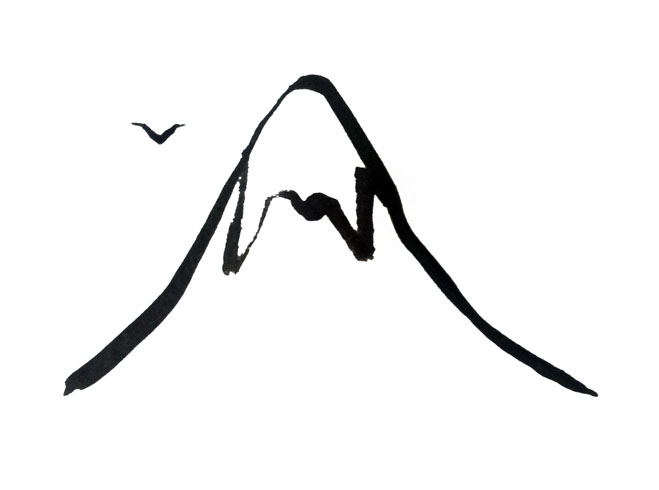
Mountain meditation
Sit upright with a relaxed spine, close your eyes, place both feet flat on the ground.

Notice your breathing. There is no need to alter your breathing. Breathe naturally.
Feel your feet supported by the ground. Feel the Earth supporting the building you are within.
Imagine you are a mountain.
When you are a mountain, you are sturdy, you are fully grounded.
There is nowhere to go. There is nothing you need to do.
When you are a mountain, you are still, you are silent, you are impartial.
As a mountain, you have no worries and you have no opinions.
As a mountain you are simply and naturally beautiful.
Take a few moments to witness whatever emotions may be present within you.
Do not comment, judge, avoid or collapse into your feelings, just witness them.
Imagine your feelings are mineral or rock deposits within the mountain that you are.
Feelings are natural formations, so allow them to sit naturally within you.
Sense your steadiness.
There may be thoughts in your mind. See your thoughts as birds flying past the mountain. You may notice a single eagle that is circling around and around, or you may notice a whole flock of birds flying past.
Do not comment, judge, avoid or fly away with your thoughts, just observe them as they are.
Return to your steadiness. Rest here.
Allow your feelings the space they already have within you.
Allow your thoughts to pass just as easily as they arise.
Keep returning to your steadiness and rest here.
Saturday, May 30, 2015
To do list for the frigid part of you
Things that I have found are very important for the full expression of your being and connection with your whole self.

Sounding:
Don't misuse your fantastic human vocal range and dexterity by containing it within the boring use of language! How many sounds can you make that can't be spelled? Humming and hissing, growling and yelping are all under-utilized and potentially liberating experiences. Groans and moans naturally emanate in moments of heightened emotion, so why not use sounds to help express and relieve emotion? I have sung many made-up songs to myself, had many private barking sessions, and I can tell you that it has given me space and deliverance when I have felt captured and overwhelmed.

Sex:
Good sex brings deep connection through absolute vulnerability. Whether it is with your spouse or a stranger, the opportunity to give and receive complete focused attention is totally unlike any other experience. Sex can not only make new people, it can make existing people new again through recognition, surrender and acceptance. When you share an experience of being completely exposed you cannot hide and honesty is non-optional. Attentive sex makes you a more open person.
Moving:
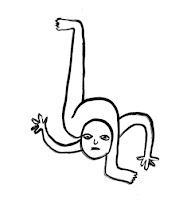
Getting weird with your body is liberating. Music assists by providing a rhythm to propel the momentum of movement. You are only as limited as you decide you are, so the deeper you want to feel yourself, the further you need to push yourself. Feeling "alive" in your body is like having had pins and needles without knowing it, and suddenly all your nerve endings awaken. Weird dancing is the fastest and most satisfying way that I've found to feel alive and free in my body.
There are so many modalities for healing and connection. These ones are so loose that they give plenty of room for experimentation and individual style.

Sounding:
Don't misuse your fantastic human vocal range and dexterity by containing it within the boring use of language! How many sounds can you make that can't be spelled? Humming and hissing, growling and yelping are all under-utilized and potentially liberating experiences. Groans and moans naturally emanate in moments of heightened emotion, so why not use sounds to help express and relieve emotion? I have sung many made-up songs to myself, had many private barking sessions, and I can tell you that it has given me space and deliverance when I have felt captured and overwhelmed.

Sex:
Good sex brings deep connection through absolute vulnerability. Whether it is with your spouse or a stranger, the opportunity to give and receive complete focused attention is totally unlike any other experience. Sex can not only make new people, it can make existing people new again through recognition, surrender and acceptance. When you share an experience of being completely exposed you cannot hide and honesty is non-optional. Attentive sex makes you a more open person.

Moving:
Getting weird with your body is liberating. Music assists by providing a rhythm to propel the momentum of movement. You are only as limited as you decide you are, so the deeper you want to feel yourself, the further you need to push yourself. Feeling "alive" in your body is like having had pins and needles without knowing it, and suddenly all your nerve endings awaken. Weird dancing is the fastest and most satisfying way that I've found to feel alive and free in my body.

Making things:
Whether it's a scribble or a delicately executed watercolour, visual expression extends your ideas, perspective and attitudes beyond your head and your body. When you can see such aspects of yourself in an artwork you can think about and talk about them more objectively. Creating artifacts naturally invokes self reflection, which is a critical skill for personal growth.There are so many modalities for healing and connection. These ones are so loose that they give plenty of room for experimentation and individual style.
Friday, April 3, 2015
Observations from travel
Extracts from my diary over the past few months:
"How thick is my loneliness? How deep is my contentment? How viscous is my bravery?"
"The gap of light which falls between train carriages tickles the grass."
"A hard plastic children's slide hovers like a blue worm in a vast flat grey front yard."
"The chimneys of factories are giant cigarettes shitting spirals of toxins directly into the mouth of the sky."
"Museums: the extraction or acquisition debate."
"This is me, in my body (if I may be so bold as to say it is mine) experiencing utterly new environments, with no one else to protect me or to refer to. This is me, at the frontier of reality, with a spinach dumpling. That is why I am here.
The simplicity of a spinach dumpling deserves my appreciation. I am here to taste, to see, to smell. Why should it be any more complex?"
"A roasted wrinkled lantern of a yellow cherry tomato. Glowing. Frail skin."
"All about me are the humans. Couplets of bipeds feeding... How strange to be surrounded by consciousness. How strange to feel lonely with people all around."
"I also enjoyed Claes Oldenburg's Mouse Museum. The wall text described the objects inside as 'non-art' which is true, but I found it more profound that they were objects of mimicry... plastic pretending to be a peanut, a double ended penis, a pigs face (or two)... this is the pictorial plane transformed into 3 dimensions, and far more mundane and perverted! Oil and pigment pretended to be trees and people for centuries, and here plastic and wood and metal now pretend to be other things."
"The woman who picked bones from her teeth (or maybe it was gristle?) is mean. She makes fun of the young waiter. Her mouth twitches as she questions him, pinning him down with embarrassment. He is a bland little moth with a pin through his thorax, where he feels a bit queasy. I don't know what it's all about, but the head waiter is in on it too. The balding man laughs with an incredulous open mouth at his wife after the young waiter has passed. He finds her funny. I find her bitter. She's a lemon, why else would her lips pucker and twitch like that? Sour puss."
"Three or four people surrounding a dog lying down, it's lower jaw was snapping up some food like a wind-up toy."
"Entering tunnels through mountains is like penetrating the earth, I am a little sperm."
"Slow falling big snowflakes remind me of polystyrene - shouldn't it be the other way around seeing that snow came before human debris?"
"Human and earth's architecture change between countries. In Italy, pastel coloured apartments: apricot, yellow, yucky pink, turquoise and brown. No small wooden huts at the side of the train tracks as there are in Austria. The mountains are softer - less pointy and less snow. The roofs are flatter in Italy."
"Art galleries are places where people come and look confused. I suppose they come here to experience beauty, but the way they wander around and turn their heads suggests bewilderment."
"Sometimes when things are put in close proximity they begin to merge. Like when you pack a banana and a sandwich in your lunchbox and your sandwich ends up tasting and smelling like a banana. Such is not the case with Europe, despite these countries being so small and close. No, they have maintained their distinct flavours. Although a somewhat bland English language sauce has been splattered on top. Made from b-grade ingredients."
"I knew I wanted to grow by exposure."
"Today I went to the gallery of Modern Art. And that is all I have to say about it."
"Today I saw one of the conmen who was pretending to be a station official at Termini again, walking down the street. So unlikely that I would see him twice. He was the old guy with the hat who was a bad actor. He was wearing the same clothes, a brown leather jacket. He looked worn out."
"...there was a parade of Bolivian dancers on the way. Strange vibrant tokenistic cultural experience. Pumps, short dresses. I love chunky thighs."
"I saw a man wrapped in a piece of golden spandex with an Egyptian mask on his face. He was being a living sculpture. He was all wrapped up still like a pupa, but I saw him jerk with a sneeze."
"I gave a clementine to a homeless woman. I found a tiny plastic bird on the ground."
"The sarcophagus of Raphael was there. The inscription said that nature thought she might die herself upon Raphael's death. Such an incredible statement. By what process does marble obtain it's bruises and veins? There is no other substance so deeply connected to the earth. It is earth. Dense earth. So interesting to see it enthroned in an edifice to more ethereal divinities.
We get to the sky god through the earth's belly."
"Watching a gaggle of Chinese children playing - leaping and racing and climbing. They are enjoying themselves."
"Like water that forms the shape of whatever space it is poured into, I form the attitude and outlook of any socio-political context I'm poured into."
"My experience as a human is an embodied experience. Yet there is a complication somehow. My spirit refuses to be on the receiving end of so much oppression, and so I disassociate with womanhood."
"When my body is dead, I want it to have been well loved. It's that desire to be consumed. Individuation blurred through the construction of bodies. When you stick things together, they seem more whole. If I stick a lot of humans in me, will I feel more whole? Connected?"
"The waitress is beautiful and has one broken eye. It looks inwards."
"Art and Language perpetuate a culture of elitist rhetoric. Even though they are sardonic and reflectively critical of Western art history they are just as exclusionary. People can't approach them."
"Have no home and no money. Create a web of relationships founded on trust, sharing and respect."
"I smell like wet dog. Like dirty clothes. Like hundreds of thousands of dead skin cells. What will I be like when I am 35? Will my chemical composition have changed dramatically like that of a cake? Will I bloat and rise? Will I become more wise? Wiser? Will I be wiser? Do polka dots come from Spain? Did they spread like measles across the planet on bags and skirts, infecting people with their symmetry and simple joy? How are they so happy, these little dots? They are like a perfect society. they are a perfect Socialist state. Each equal size with an equal amount of space around them. I am sitting in a flamenco bar."
"I cried a bit just because I'm hungry and tired and so close to the end of my trip. A drop of liquid snot fell out of my right nostril like a nose tear."
"I don't think it's an ideas day. There's so much going on in the world - but right now I can't see how to comment on any of it in an innovative sustainable way. Boo. I'm only having mundane domestic ideas. Idea: obtain cars that are going to scrap metal and make them into community gardens."
"Right now I am feeling especially prone to doubt regarding my capabilities.
My capability to make good art, to dedicate myself to art, to be focused, to comprehend the vast web of connections and meanings in the contemporary art world, to make something with appropriate balance between coherence and ambiguity, to make things rich in meanings, to make things grounded in politically potent human experiences, to not get lost in the intellectual side of my work, to be good at promoting myself, to realise my relationship with the capitalism of the art world, to have faith in myself and not chicken out on my art...
Dedicating myself to my art is a frightening possibility because it involves:
- MAIMING OF MY EGO IF I ATTACH MY IDENTITY TO THE WORK OR ROLE 'ARTIST'
- POTENTIAL POVERTY
- UNWAVERING FOCUS AND FAITH IN MYSELF AND THE WORK
- GIVING EXISTENCE TO WORK THAT IS EXPLICIT AND PROVOCATIVE (thus limiting my future possibilities for employment and possibly causing some tension in personal relations)
Fear of failure should not be enough reason not to try.
The possibility of giving something: a new angle, a different position, some humour, something sobering, something informative, the possibility of sharing should be sufficient impetus to try. Really it is a duty to carry out these ideas.
It would be wasteful not to try, and I'm all about sustainability.
If I really want to live a zero waste lifestyle, I should not waste my
TIME or my POTENTIAL or my IDEAS"
"Talk to more people about everything."
"When I am delicately drunk, things are pleasant and I am relaxed. When I get back to Australia, I will picnic, I will make sangria, I will get my bike fixed (maybe), I will write postcards to my friends, even the ones I see often. I will relax, and by relaxing I will have surreptitiously fucked the system."
"All people want to individuate and simultaneously be consumed. What quantum process is this ??????????"
As you can see, I am far more lavish with my usage of punctuation, capitalisation and underlining in my hand written diary. There are lots of drawings in there too, but I will keep those for my own private enjoyment.
"How thick is my loneliness? How deep is my contentment? How viscous is my bravery?"
"The gap of light which falls between train carriages tickles the grass."
"A hard plastic children's slide hovers like a blue worm in a vast flat grey front yard."
"The chimneys of factories are giant cigarettes shitting spirals of toxins directly into the mouth of the sky."
"Museums: the extraction or acquisition debate."
"This is me, in my body (if I may be so bold as to say it is mine) experiencing utterly new environments, with no one else to protect me or to refer to. This is me, at the frontier of reality, with a spinach dumpling. That is why I am here.
The simplicity of a spinach dumpling deserves my appreciation. I am here to taste, to see, to smell. Why should it be any more complex?"
"A roasted wrinkled lantern of a yellow cherry tomato. Glowing. Frail skin."
"All about me are the humans. Couplets of bipeds feeding... How strange to be surrounded by consciousness. How strange to feel lonely with people all around."
"I also enjoyed Claes Oldenburg's Mouse Museum. The wall text described the objects inside as 'non-art' which is true, but I found it more profound that they were objects of mimicry... plastic pretending to be a peanut, a double ended penis, a pigs face (or two)... this is the pictorial plane transformed into 3 dimensions, and far more mundane and perverted! Oil and pigment pretended to be trees and people for centuries, and here plastic and wood and metal now pretend to be other things."
"The woman who picked bones from her teeth (or maybe it was gristle?) is mean. She makes fun of the young waiter. Her mouth twitches as she questions him, pinning him down with embarrassment. He is a bland little moth with a pin through his thorax, where he feels a bit queasy. I don't know what it's all about, but the head waiter is in on it too. The balding man laughs with an incredulous open mouth at his wife after the young waiter has passed. He finds her funny. I find her bitter. She's a lemon, why else would her lips pucker and twitch like that? Sour puss."
"Three or four people surrounding a dog lying down, it's lower jaw was snapping up some food like a wind-up toy."
"Entering tunnels through mountains is like penetrating the earth, I am a little sperm."
"Slow falling big snowflakes remind me of polystyrene - shouldn't it be the other way around seeing that snow came before human debris?"
"Human and earth's architecture change between countries. In Italy, pastel coloured apartments: apricot, yellow, yucky pink, turquoise and brown. No small wooden huts at the side of the train tracks as there are in Austria. The mountains are softer - less pointy and less snow. The roofs are flatter in Italy."
"Art galleries are places where people come and look confused. I suppose they come here to experience beauty, but the way they wander around and turn their heads suggests bewilderment."
"Sometimes when things are put in close proximity they begin to merge. Like when you pack a banana and a sandwich in your lunchbox and your sandwich ends up tasting and smelling like a banana. Such is not the case with Europe, despite these countries being so small and close. No, they have maintained their distinct flavours. Although a somewhat bland English language sauce has been splattered on top. Made from b-grade ingredients."
"I knew I wanted to grow by exposure."
"Today I went to the gallery of Modern Art. And that is all I have to say about it."
"Today I saw one of the conmen who was pretending to be a station official at Termini again, walking down the street. So unlikely that I would see him twice. He was the old guy with the hat who was a bad actor. He was wearing the same clothes, a brown leather jacket. He looked worn out."
"...there was a parade of Bolivian dancers on the way. Strange vibrant tokenistic cultural experience. Pumps, short dresses. I love chunky thighs."
"I saw a man wrapped in a piece of golden spandex with an Egyptian mask on his face. He was being a living sculpture. He was all wrapped up still like a pupa, but I saw him jerk with a sneeze."
"I gave a clementine to a homeless woman. I found a tiny plastic bird on the ground."
"The sarcophagus of Raphael was there. The inscription said that nature thought she might die herself upon Raphael's death. Such an incredible statement. By what process does marble obtain it's bruises and veins? There is no other substance so deeply connected to the earth. It is earth. Dense earth. So interesting to see it enthroned in an edifice to more ethereal divinities.
We get to the sky god through the earth's belly."
"Watching a gaggle of Chinese children playing - leaping and racing and climbing. They are enjoying themselves."
"Like water that forms the shape of whatever space it is poured into, I form the attitude and outlook of any socio-political context I'm poured into."
"My experience as a human is an embodied experience. Yet there is a complication somehow. My spirit refuses to be on the receiving end of so much oppression, and so I disassociate with womanhood."
"When my body is dead, I want it to have been well loved. It's that desire to be consumed. Individuation blurred through the construction of bodies. When you stick things together, they seem more whole. If I stick a lot of humans in me, will I feel more whole? Connected?"
"The waitress is beautiful and has one broken eye. It looks inwards."
"Art and Language perpetuate a culture of elitist rhetoric. Even though they are sardonic and reflectively critical of Western art history they are just as exclusionary. People can't approach them."
"Have no home and no money. Create a web of relationships founded on trust, sharing and respect."
"I smell like wet dog. Like dirty clothes. Like hundreds of thousands of dead skin cells. What will I be like when I am 35? Will my chemical composition have changed dramatically like that of a cake? Will I bloat and rise? Will I become more wise? Wiser? Will I be wiser? Do polka dots come from Spain? Did they spread like measles across the planet on bags and skirts, infecting people with their symmetry and simple joy? How are they so happy, these little dots? They are like a perfect society. they are a perfect Socialist state. Each equal size with an equal amount of space around them. I am sitting in a flamenco bar."
"I cried a bit just because I'm hungry and tired and so close to the end of my trip. A drop of liquid snot fell out of my right nostril like a nose tear."
"I don't think it's an ideas day. There's so much going on in the world - but right now I can't see how to comment on any of it in an innovative sustainable way. Boo. I'm only having mundane domestic ideas. Idea: obtain cars that are going to scrap metal and make them into community gardens."
"Right now I am feeling especially prone to doubt regarding my capabilities.
My capability to make good art, to dedicate myself to art, to be focused, to comprehend the vast web of connections and meanings in the contemporary art world, to make something with appropriate balance between coherence and ambiguity, to make things rich in meanings, to make things grounded in politically potent human experiences, to not get lost in the intellectual side of my work, to be good at promoting myself, to realise my relationship with the capitalism of the art world, to have faith in myself and not chicken out on my art...
Dedicating myself to my art is a frightening possibility because it involves:
- MAIMING OF MY EGO IF I ATTACH MY IDENTITY TO THE WORK OR ROLE 'ARTIST'
- POTENTIAL POVERTY
- UNWAVERING FOCUS AND FAITH IN MYSELF AND THE WORK
- GIVING EXISTENCE TO WORK THAT IS EXPLICIT AND PROVOCATIVE (thus limiting my future possibilities for employment and possibly causing some tension in personal relations)
Fear of failure should not be enough reason not to try.
The possibility of giving something: a new angle, a different position, some humour, something sobering, something informative, the possibility of sharing should be sufficient impetus to try. Really it is a duty to carry out these ideas.
It would be wasteful not to try, and I'm all about sustainability.
If I really want to live a zero waste lifestyle, I should not waste my
TIME or my POTENTIAL or my IDEAS"
"Talk to more people about everything."
"When I am delicately drunk, things are pleasant and I am relaxed. When I get back to Australia, I will picnic, I will make sangria, I will get my bike fixed (maybe), I will write postcards to my friends, even the ones I see often. I will relax, and by relaxing I will have surreptitiously fucked the system."
"All people want to individuate and simultaneously be consumed. What quantum process is this ??????????"
As you can see, I am far more lavish with my usage of punctuation, capitalisation and underlining in my hand written diary. There are lots of drawings in there too, but I will keep those for my own private enjoyment.
Wednesday, November 26, 2014
Transgender
People practice a bifurcation of reality.
The most elementary discrimination one makes about a stranger is whether they are a man or a woman, a girl or a boy. I haven't seen gender help anyone, I've only perceived it as a constraint.
Humans like to split things into infinitesimally minute pieces. For example: man, short, angry, middle class, white, fat. These labels are like mental maths games that add up to some kind of "answer". The answer is invariably a judgement.
A judgement can never be verified as absolute truth, but judgments are nonetheless believed in.
Getting back to gender: I do not believe it exists, but I can cede that other people believe in it.
Transgender is an actual modality of experience, which pretty much poos all over the gender binary. The fact that transgender is little understood or poorly publicised does not mean it is illegitimate.
Civilizations have always progressed falteringly. Anything revolutionary or contrary is initially snuffed. There are knowledges we have destroyed because they extended beyond the boundaries of a dominant worldview. The first nations people of Australia (note nations because hundreds of nations lived on this land) knew everything necessary for survival in this country, but because that knowledge was contrary to the invading Western worldview it was destroyed. I do not even know how many nations, people or languages died.
In a sort of similar way, third gender, gender neutral or ungendered are concepts that this particular society (Anglophone Western) cannot really understand and therefore see as irrelevent. Our language doesn't accommodate pronouns for such people, which indicates a belief that such people have never existed. We have always existed.
I am uprooting the gender-centric mental maths games I play in my own head because I know that I am gender neutral in a female body. So it would be unfair for me to go around assuming a person is a man because they don't have breasts, because they have a beard, because their voice is deep.
Gender and the physical body have been so bound together in our thinking.
But think about stick insects: they sure look like sticks, but they are not sticks.
Think about elementary particles: solid objects are comprised mostly of empty space.
Appearances only offer a shell of understanding, the substance is often invisible.
These days I see gender as a shell of sorts, an armor for protecting the purest and most inexpressible part of oneself. I feel a need to disarm, to allow that ineffable self to be seen. Perhaps I will surgically modify my body, or gender neutralise my clothes or change my name. Or maybe I will decide those things are unnecessary. The only thing I am sure of is myself.
How am I sure? Because it is so uncomfortable wearing this shell.

INTERESTING FACT! Transgender is often perceived as an intermediary state. "Trans" comes from Proto-Indo-European "to cross over", and many people believe that transgender people are crossing over from female to male or visa-versa. That belief excludes the whole gamut of gender-variant individuals who are beyond or between male and female.
The most elementary discrimination one makes about a stranger is whether they are a man or a woman, a girl or a boy. I haven't seen gender help anyone, I've only perceived it as a constraint.
Humans like to split things into infinitesimally minute pieces. For example: man, short, angry, middle class, white, fat. These labels are like mental maths games that add up to some kind of "answer". The answer is invariably a judgement.
A judgement can never be verified as absolute truth, but judgments are nonetheless believed in.
Getting back to gender: I do not believe it exists, but I can cede that other people believe in it.
Transgender is an actual modality of experience, which pretty much poos all over the gender binary. The fact that transgender is little understood or poorly publicised does not mean it is illegitimate.
Civilizations have always progressed falteringly. Anything revolutionary or contrary is initially snuffed. There are knowledges we have destroyed because they extended beyond the boundaries of a dominant worldview. The first nations people of Australia (note nations because hundreds of nations lived on this land) knew everything necessary for survival in this country, but because that knowledge was contrary to the invading Western worldview it was destroyed. I do not even know how many nations, people or languages died.
In a sort of similar way, third gender, gender neutral or ungendered are concepts that this particular society (Anglophone Western) cannot really understand and therefore see as irrelevent. Our language doesn't accommodate pronouns for such people, which indicates a belief that such people have never existed. We have always existed.
I am uprooting the gender-centric mental maths games I play in my own head because I know that I am gender neutral in a female body. So it would be unfair for me to go around assuming a person is a man because they don't have breasts, because they have a beard, because their voice is deep.
Gender and the physical body have been so bound together in our thinking.
But think about stick insects: they sure look like sticks, but they are not sticks.
Think about elementary particles: solid objects are comprised mostly of empty space.
Appearances only offer a shell of understanding, the substance is often invisible.
These days I see gender as a shell of sorts, an armor for protecting the purest and most inexpressible part of oneself. I feel a need to disarm, to allow that ineffable self to be seen. Perhaps I will surgically modify my body, or gender neutralise my clothes or change my name. Or maybe I will decide those things are unnecessary. The only thing I am sure of is myself.
How am I sure? Because it is so uncomfortable wearing this shell.
Clammy clam calamity
INTERESTING FACT! Transgender is often perceived as an intermediary state. "Trans" comes from Proto-Indo-European "to cross over", and many people believe that transgender people are crossing over from female to male or visa-versa. That belief excludes the whole gamut of gender-variant individuals who are beyond or between male and female.
Friday, November 7, 2014
Humanity is a big jerk who is beating up the Earth
If humanity was one person, from an inter-stellar perspective they would look like an innocent child who grew into an adult jerk.
The things that we all subscribe to and act out seem to be, how to put this gently... unintelligent. As a species we seem to work primarily with our basal ganglia: the parts of our brains that are concerned with dominance, control, aggression and territory.
It deeply concerns me that humans mine into the crust of the earth to extract minerals for the purpose of creating plastic bottles that will be used once and then put back into the Earth as a piece of garbage that will poison everything they contact as their toxins are released for up to 450 years.
It deeply concerns me that humans have developed complex law systems and regulate when and how people cross roads but do not adhere to the law of nature which states that ALL THINGS ARE IMPERMANENT and disrespect this fundamental and self-evident law of reality by "possessing" things (land, houses, animals, beds, key chains, televisions, letter boxes, paper, food, fences, ideas...)
Any thing that exists I will guarantee you will be consumed physically and legally by the human desire to own.
For all of our talk about how rational science has ushered in a quantum leap for human consciousness, we have made very haltering progress on the frontier of human rights and have moved in retrograde concerning Earth's rights. If we can't treat our own species with respect and kindness we can't develop our respect for non-speaking beings such as forests, oceans and animals. If technology is not eco-centric, it's because people are not eco-centric. People are not eco-centric because they are egocentric. If people continue to think primarily about themselves and not about the environment, we will not have a hospitable planet to live on. Earth is finite.
The truly disappointing thing is that humans have examples of generosity and interconnection surrounding them in their natural environment yet few of us follow such a way of life. We are largely unconscious of it, but we already are interconnected. Sunlight doesn't just touch you, it penetrates you. We breathe in tandem with the plant kingdom. Whatever you consume orally drives you nutritionally. You are constantly shedding cells into the atmosphere. Ironically, you don't own things, you are everything.
When animals eat each other, it might appear violent, but actually they are just sharing. Sharing around the nutrients. When humans kill each other, that is actual violence. We simply destroy. And contrary to that, we also compulsively make. Yet because energy is not created or destroyed, what we make always takes its toll. The consequence of feeding the unstoppable demand for more stuff is that we deplete Earth's resources and enslave each other. That sounds extreme, but it's not. It's simply true. We don't talk in such ways because it causes guilt.
Instead of being guilty, just recycle as much as you can, just foster an attitude of respect in yourself for other beings and learn how you can act in accordance with your values. Just share your concern, like I am.

The things that we all subscribe to and act out seem to be, how to put this gently... unintelligent. As a species we seem to work primarily with our basal ganglia: the parts of our brains that are concerned with dominance, control, aggression and territory.
It deeply concerns me that humans mine into the crust of the earth to extract minerals for the purpose of creating plastic bottles that will be used once and then put back into the Earth as a piece of garbage that will poison everything they contact as their toxins are released for up to 450 years.
It deeply concerns me that humans have developed complex law systems and regulate when and how people cross roads but do not adhere to the law of nature which states that ALL THINGS ARE IMPERMANENT and disrespect this fundamental and self-evident law of reality by "possessing" things (land, houses, animals, beds, key chains, televisions, letter boxes, paper, food, fences, ideas...)
Any thing that exists I will guarantee you will be consumed physically and legally by the human desire to own.
For all of our talk about how rational science has ushered in a quantum leap for human consciousness, we have made very haltering progress on the frontier of human rights and have moved in retrograde concerning Earth's rights. If we can't treat our own species with respect and kindness we can't develop our respect for non-speaking beings such as forests, oceans and animals. If technology is not eco-centric, it's because people are not eco-centric. People are not eco-centric because they are egocentric. If people continue to think primarily about themselves and not about the environment, we will not have a hospitable planet to live on. Earth is finite.
The truly disappointing thing is that humans have examples of generosity and interconnection surrounding them in their natural environment yet few of us follow such a way of life. We are largely unconscious of it, but we already are interconnected. Sunlight doesn't just touch you, it penetrates you. We breathe in tandem with the plant kingdom. Whatever you consume orally drives you nutritionally. You are constantly shedding cells into the atmosphere. Ironically, you don't own things, you are everything.
When animals eat each other, it might appear violent, but actually they are just sharing. Sharing around the nutrients. When humans kill each other, that is actual violence. We simply destroy. And contrary to that, we also compulsively make. Yet because energy is not created or destroyed, what we make always takes its toll. The consequence of feeding the unstoppable demand for more stuff is that we deplete Earth's resources and enslave each other. That sounds extreme, but it's not. It's simply true. We don't talk in such ways because it causes guilt.
Instead of being guilty, just recycle as much as you can, just foster an attitude of respect in yourself for other beings and learn how you can act in accordance with your values. Just share your concern, like I am.
Bird recycling a worm.
Wednesday, September 10, 2014
Articulating ineptitude
I would like the write about three linked incidents on the topic of awkwardness.
Last school holidays I worked at an indoor pool watching children swim, assisting them to pull goggles and strap floaties on. One afternoon a be-goggled red-headed boy swam up to me and asked
"Excuse me, do you know how to become someone's friend without seeming awkward?"
I was a bit thrown by how earnestly the question was asked and was deeply affected: this is something I hadn't known how to go about myself for most of my childhood. Nonetheless I gave a pretty practical answer - ask their name and ask what they are playing, and whether they would like to play with you.
He thanked me and swam off to do some thinking, and I crouched there doing some thinking too, watching others paddling and splashing.
After a few minutes he swam back up to me.
"Excuse me, I'm not very confident."
I reflected to him that sometimes people need to pretend to be more confident than they are in order to achieve particular goals, and that in actuality he may be more confident than he admits to himself. After all he asked a rather bold question that many people would be too hesitant to ask. His very actions revealed the falsity of his disbelief in himself. He nodded in agreement and swam away.
After the signal had gone for everybody to hop out of the pool and start getting changed he scuffled past and said "Thank you very much for helping me" with a nice smile. I asked how it went, he said it went well. Even this gesture, his thanking me, had the same unique combination of sincerity and tactlessness that his original question did.
The very admittance of your own awkwardness is both deeply awkward and so authentic that it is quite natural.
I know a few people who display this paradoxical behaviour. And I suspect that I might be one of them.
A few years ago I admitted to a group of strangers that I was petrified because at a deep level I doubted whether I had any character, any substance, any defining qualities that made me distinct from the blur of humanity. The man orchestrating the conversation said it was character that compelled me to ask such a cutting question. Sometimes our own nature is so close to us, like a second skin, that we fail to see it completely.
I find there is something very attractive about people who are honest about their gawkiness, their nervousness, their ineptitude. Because awkwardness is essentially difficulty handling oneself, the very act of conceding that you have faults or issues or parts of yourself that you don't yet understand is the reversal of awkwardness. It's the momentary artful expression of artlessness. It's a ritual. People who are constantly undergoing such rituals are wonderful to be around, they're always renewing themselves, always undoing themselves. But more pertinently they are always just themselves, without any veils concealing however graceless or imperfect they are.

Last school holidays I worked at an indoor pool watching children swim, assisting them to pull goggles and strap floaties on. One afternoon a be-goggled red-headed boy swam up to me and asked
"Excuse me, do you know how to become someone's friend without seeming awkward?"
I was a bit thrown by how earnestly the question was asked and was deeply affected: this is something I hadn't known how to go about myself for most of my childhood. Nonetheless I gave a pretty practical answer - ask their name and ask what they are playing, and whether they would like to play with you.
He thanked me and swam off to do some thinking, and I crouched there doing some thinking too, watching others paddling and splashing.
After a few minutes he swam back up to me.
"Excuse me, I'm not very confident."
I reflected to him that sometimes people need to pretend to be more confident than they are in order to achieve particular goals, and that in actuality he may be more confident than he admits to himself. After all he asked a rather bold question that many people would be too hesitant to ask. His very actions revealed the falsity of his disbelief in himself. He nodded in agreement and swam away.
After the signal had gone for everybody to hop out of the pool and start getting changed he scuffled past and said "Thank you very much for helping me" with a nice smile. I asked how it went, he said it went well. Even this gesture, his thanking me, had the same unique combination of sincerity and tactlessness that his original question did.
The very admittance of your own awkwardness is both deeply awkward and so authentic that it is quite natural.
I know a few people who display this paradoxical behaviour. And I suspect that I might be one of them.
A few years ago I admitted to a group of strangers that I was petrified because at a deep level I doubted whether I had any character, any substance, any defining qualities that made me distinct from the blur of humanity. The man orchestrating the conversation said it was character that compelled me to ask such a cutting question. Sometimes our own nature is so close to us, like a second skin, that we fail to see it completely.
I find there is something very attractive about people who are honest about their gawkiness, their nervousness, their ineptitude. Because awkwardness is essentially difficulty handling oneself, the very act of conceding that you have faults or issues or parts of yourself that you don't yet understand is the reversal of awkwardness. It's the momentary artful expression of artlessness. It's a ritual. People who are constantly undergoing such rituals are wonderful to be around, they're always renewing themselves, always undoing themselves. But more pertinently they are always just themselves, without any veils concealing however graceless or imperfect they are.
The speedo
Friday, August 29, 2014
The split
They say I'm a polite person, but there's someone who I have been obnoxiously rude to.
I completely withdrew my attention from them. I completely ignored them whenever they attempted to speak with me, and I assumed the worst of them. I believed they had no value. I believed they were useless, pathetic, would never do anything good for the world. I abused them verbally and psychologically. I behaved in this manner for years.
Because I was disgusted by them I was oblivious that my behaviour was not okay. What's horrible about this is that we had to spend a lot of time together. They began to wish that I would die, and who could blame them? We were deeply entrenched in a dysfunctional relationship.
Eventually the pain of having been a pariah for so long led to a deep rage and this person became destructive. This person is not a whole person, but a part of myself who has been separated from me.
I am not entirely without fault in my damaging behaviour. This separation, when this aspect of myself became seen as a foreign entity lodged inside me, happened at large long before I existed. Before me, there were psychologists and psychiatrists who expounded that depression is a problem which needs to be managed. Before me, people were obsessed with achieving and being productive, and they still are. So when I began to exist and when a sadness was inside me the culture of self control and emotional management was deeply entrenched in my world. I began an unconscious excommunication with sadness.
This estrangement has been punctuated with brief sharp jabs of spite. Once I wrote to them: "If I ever
commit suicide it would be only to kill you. Never as a tragic mishap in a war
against my own abilities, but because you are a disability not worth living
with." Because emotions live in a part of the psyche that precedes language, our arguments would be a combination of my own malevolent use of English and their deep raging dance. It thumps in my chest, painful and restless.
I had the opportunity to speak with this alienated entity a few nights ago in a focused state with another person there to guide the process. With a lot of cajoling, patience, pain and fear we spoke. In a voiceless voice they said "I don't trust you because even though I live in your heart you have given me no love."
So I learnt that I have been unbearably cruel. I am learning that people in this society are far more cruel and unkind to themselves than they would dare to be towards others. And sometimes unconsciously so. We are taught to block depression, advised to avoid it through medication. We divorce ourselves from sadness and are so hell-bent on disassociating with it that it begins to feel foreign.
Now my depression and I go on romantic dates. They still dance a wild pounding ache in my chest but when I stop to listen (instead of panic over the irrational pain), and say nice things like "hey baby I can see you" or "you're welcome here" or "what's up?" they lay heavy and flat and stare. This hurts less. I'm hoping that despite the years of senseless abuse I've aimed at this fugitive, we can integrate into one whole being who feels all feelings without having to internally bash and split themselves up.
Here's to a loving relationship with all of your selves.
Now my depression and I go on romantic dates. They still dance a wild pounding ache in my chest but when I stop to listen (instead of panic over the irrational pain), and say nice things like "hey baby I can see you" or "you're welcome here" or "what's up?" they lay heavy and flat and stare. This hurts less. I'm hoping that despite the years of senseless abuse I've aimed at this fugitive, we can integrate into one whole being who feels all feelings without having to internally bash and split themselves up.
Here's to a loving relationship with all of your selves.
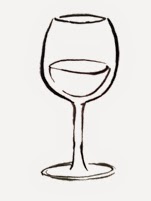
Three cheers for deep depression!
So bold and wise and free!
So bold and wise and free!
Who like a glass of wine
Adds flavour and depth to me
(hee hee hee hee hee)
Sunday, July 6, 2014
A little trip, a little flick, a wandering breath
I went on a journey last night, in a few hours I travelled very far. My body barely moved but I journeyed around the world.
My breath, like a little white flame with a sparkly tail, shot a few inches out of my mouth with a spunky and curious kind of flick, and then with great speed and a motion similar to that of a jellyfish pulsing through water, began to aviate it's way through Earth's atmosphere independent of my body.
It sailed through oceanic winds, drifted on lazy warm urban breezes, got sucked into many mouths... The nostrils of a chicken in an open green pasture. It slipped into the mouth of a woman resting on a hillside, did a simple somersault in her lungs and continued on its way. It was inhaled by many animals, many people, gasped up by building storms, weighed down by particles of water. Never destroyed or osmosed by the surrounding air currents, a sovereign little breath making a journey that was determined wholly by circumstance. None of it was difficult, all of it was interesting.
It slipped up the sides of the Himalayas. That was the culmination of its pilgrimage. The mountains glowed pink and blue, shafts of light illuminated facades coated in brilliant snow. Then it returned instantaneously, and I lay there realising that my breath is always journeying across the Earth. Every exhalation is a tiny throb, a small yearning, a mute prayer, a wish to be consumed, to be shared. Every breath is consumed, is shared, mingles with all air and passes through all lungs. Every breath is a sharp jab of chilled mountain air, is a heavy haze of noxious polluted metropolitan air, is the salty whip or lazy drift of air that rides on oceans, is the dusty hot burning air that tortures desert sand into rippling tides of blazing patterns; undulating furrows and crests repeated on and on. You don't need to think of yourself as separate from all this, and you can think of yourself as inseparable from all this.
My breath, like a little white flame with a sparkly tail, shot a few inches out of my mouth with a spunky and curious kind of flick, and then with great speed and a motion similar to that of a jellyfish pulsing through water, began to aviate it's way through Earth's atmosphere independent of my body.
It sailed through oceanic winds, drifted on lazy warm urban breezes, got sucked into many mouths... The nostrils of a chicken in an open green pasture. It slipped into the mouth of a woman resting on a hillside, did a simple somersault in her lungs and continued on its way. It was inhaled by many animals, many people, gasped up by building storms, weighed down by particles of water. Never destroyed or osmosed by the surrounding air currents, a sovereign little breath making a journey that was determined wholly by circumstance. None of it was difficult, all of it was interesting.
It slipped up the sides of the Himalayas. That was the culmination of its pilgrimage. The mountains glowed pink and blue, shafts of light illuminated facades coated in brilliant snow. Then it returned instantaneously, and I lay there realising that my breath is always journeying across the Earth. Every exhalation is a tiny throb, a small yearning, a mute prayer, a wish to be consumed, to be shared. Every breath is consumed, is shared, mingles with all air and passes through all lungs. Every breath is a sharp jab of chilled mountain air, is a heavy haze of noxious polluted metropolitan air, is the salty whip or lazy drift of air that rides on oceans, is the dusty hot burning air that tortures desert sand into rippling tides of blazing patterns; undulating furrows and crests repeated on and on. You don't need to think of yourself as separate from all this, and you can think of yourself as inseparable from all this.
Friday, June 13, 2014
Veg and other consumables
What is happening?
Everything is exceeding itself. Shampoo for ultra-healthy hair, sports drinks to induce that "super-hydrated" feeling, mascara for lashes up to 200 times thicker. What does ultra-healthy mean anyway? Isn't "healthy" the peak category in health? What does it feel like to be super-hydrated? Soggy?
Egg whites now come pre-separated and cartoned with added "egg flavour" to make scrambled eggs so much simpler. Avocado comes packaged pre-mashed in little plastic cups with preservative added.
It won't be too long until babies come packaged in a tear-top resealable plastic film, floating in a nutrient enriched fudge flavoured protein goo with activated chia seeds.
Personally, I want to pull my food from the earth with both hands, and admire it in all it's freaky dirty sexy glory. I think there is no healthier existence than the existence of a vegetable in rich soil, fed by rain, the earth, the sun. Thinking nothing, growing slowly, smelling like mud.

Everything is exceeding itself. Shampoo for ultra-healthy hair, sports drinks to induce that "super-hydrated" feeling, mascara for lashes up to 200 times thicker. What does ultra-healthy mean anyway? Isn't "healthy" the peak category in health? What does it feel like to be super-hydrated? Soggy?
Egg whites now come pre-separated and cartoned with added "egg flavour" to make scrambled eggs so much simpler. Avocado comes packaged pre-mashed in little plastic cups with preservative added.
It won't be too long until babies come packaged in a tear-top resealable plastic film, floating in a nutrient enriched fudge flavoured protein goo with activated chia seeds.
Personally, I want to pull my food from the earth with both hands, and admire it in all it's freaky dirty sexy glory. I think there is no healthier existence than the existence of a vegetable in rich soil, fed by rain, the earth, the sun. Thinking nothing, growing slowly, smelling like mud.
Hello I am a little beet
With a hairy root
And this is a little worm
Making its commute
Sunday, March 2, 2014
Embarrassment
"Saints are not only rare but disconcerting. Even in scripture, they are often found embarrassing!" - Bhaduri Mahasaya
Maybe we are actually just embarrassed of ourselves, and people of extraordinary holiness who listen fully with no thoughts in their mind or look deeply into your eyes without judgement are like pools of stillness that reflect the image of yourself back to you.
Saints are people we think of as utterly themselves and simultaneously totally inviolable. Joan of Arc got burnt, but hey! She was totally unabashed about her schizophrenia and not only do we remember her for that, we reckon she's full of greatness! Same thing with Mohammed. Francis of Assisi went around in nothing but a hessian sack (if the portrait paintings are anything to go by) - screw worldly possessions, that dude got totally dope on nature. We're somewhat comfortable remembering these dead people, but if you met Joan in the midst of one of her visions, or caught a whiff of Francis in his sack, you'd be embarrassed.
These people were being themselves.
Why are we embarrassed of selfhood?
Who told you that you are embarrassing?
Who convinced you that parts of your body and mind and feelings need to be hidden?
Why do you still believe them?

Maybe we are actually just embarrassed of ourselves, and people of extraordinary holiness who listen fully with no thoughts in their mind or look deeply into your eyes without judgement are like pools of stillness that reflect the image of yourself back to you.
Saints are people we think of as utterly themselves and simultaneously totally inviolable. Joan of Arc got burnt, but hey! She was totally unabashed about her schizophrenia and not only do we remember her for that, we reckon she's full of greatness! Same thing with Mohammed. Francis of Assisi went around in nothing but a hessian sack (if the portrait paintings are anything to go by) - screw worldly possessions, that dude got totally dope on nature. We're somewhat comfortable remembering these dead people, but if you met Joan in the midst of one of her visions, or caught a whiff of Francis in his sack, you'd be embarrassed.
These people were being themselves.
Why are we embarrassed of selfhood?
Who told you that you are embarrassing?
Who convinced you that parts of your body and mind and feelings need to be hidden?
Why do you still believe them?
Her Holiness
Subscribe to:
Posts (Atom)